
Find us at booth #83, join us for a harbor side happy hour, or catch Gorish’s talk.

Sept, 16-18 > Learn more


Tamanna Mishra

March 27, 2026
Every sales leader has lived through this moment.
The forecast meeting starts. The pipeline dashboard looks healthy. Reps say their deals are progressing. Leadership nods along.
Then the quarter ends and three “committed” deals vanish. Because your reps had happy ears that they passed on to you.
If this sounds familiar, you are not alone.
Modern sales teams track more data than ever before. Calls are recorded. Meetings are transcribed. Emails are logged. CRM fields are updated (though often, you just think they are). Dashboards show pipeline movement across every stage.
And yet the biggest questions in revenue leadership still feel frustratingly hard to answer.
Which deals are actually real.
Which ones are stalling.
Which reps need help before a deal goes sideways.
This is the gap revenue intelligence platforms were built to close.
A modern revenue intelligence platform analyzes sales conversations, buyer signals, and pipeline activity to surface insights that improve forecasting, coaching, and deal execution.
Instead of guessing what is happening inside deals, sales teams can finally see it.
In this guide, we compare the best revenue intelligence platforms in 2026, explain how they differ, and show how modern AI-driven platforms are reshaping how revenue teams operate.
Choosing the best revenue intelligence platform depends on how your sales organization operates. Some platforms prioritize conversation intelligence. Others focus on forecasting or activity capture.
Below is a comparison of several widely used revenue intelligence platforms.
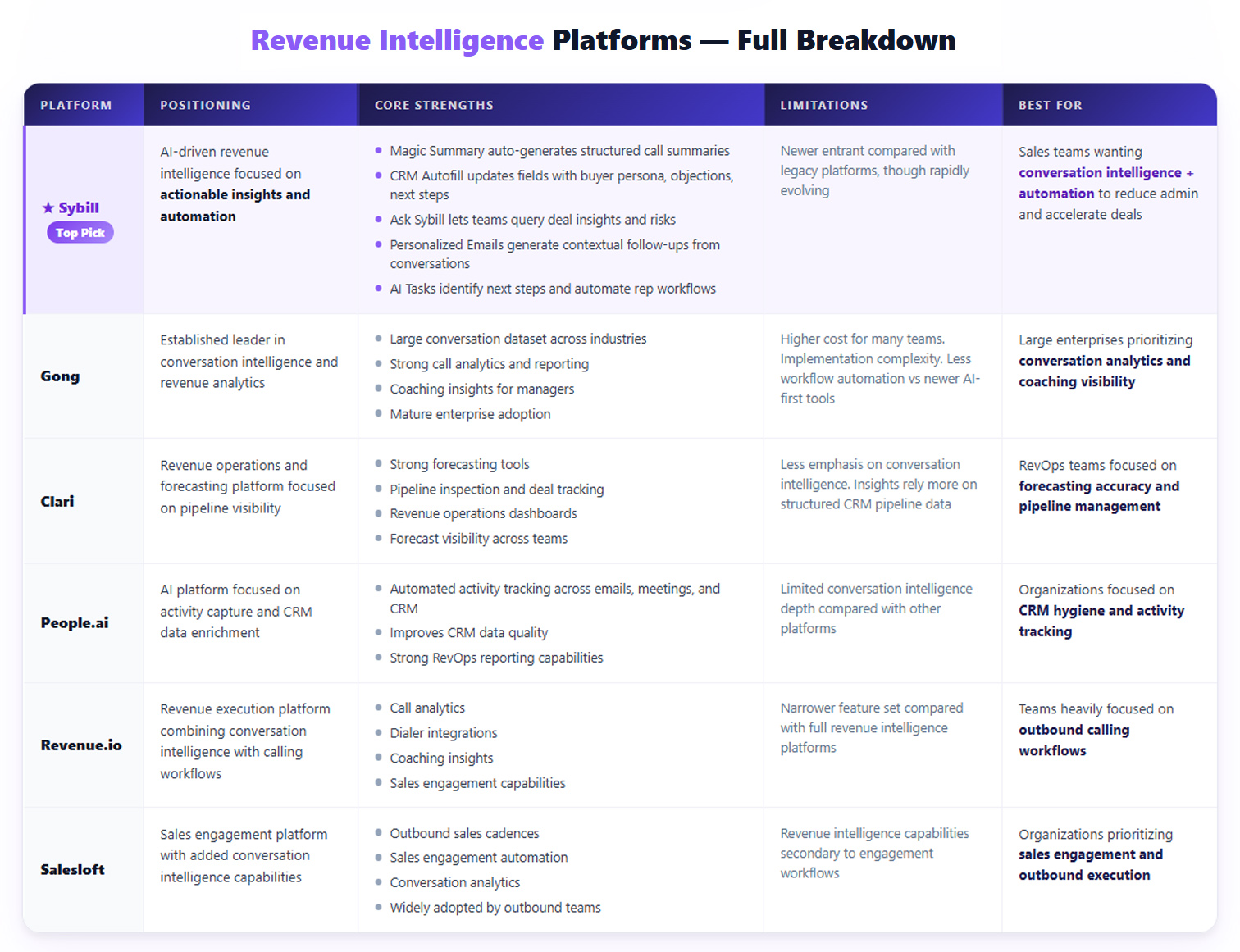
Best revenue intelligence platform for sales teams that want actionable intelligence and automation.
Sybill is an AI-driven revenue intelligence platform designed to transform sales conversations into immediate insights and actions.
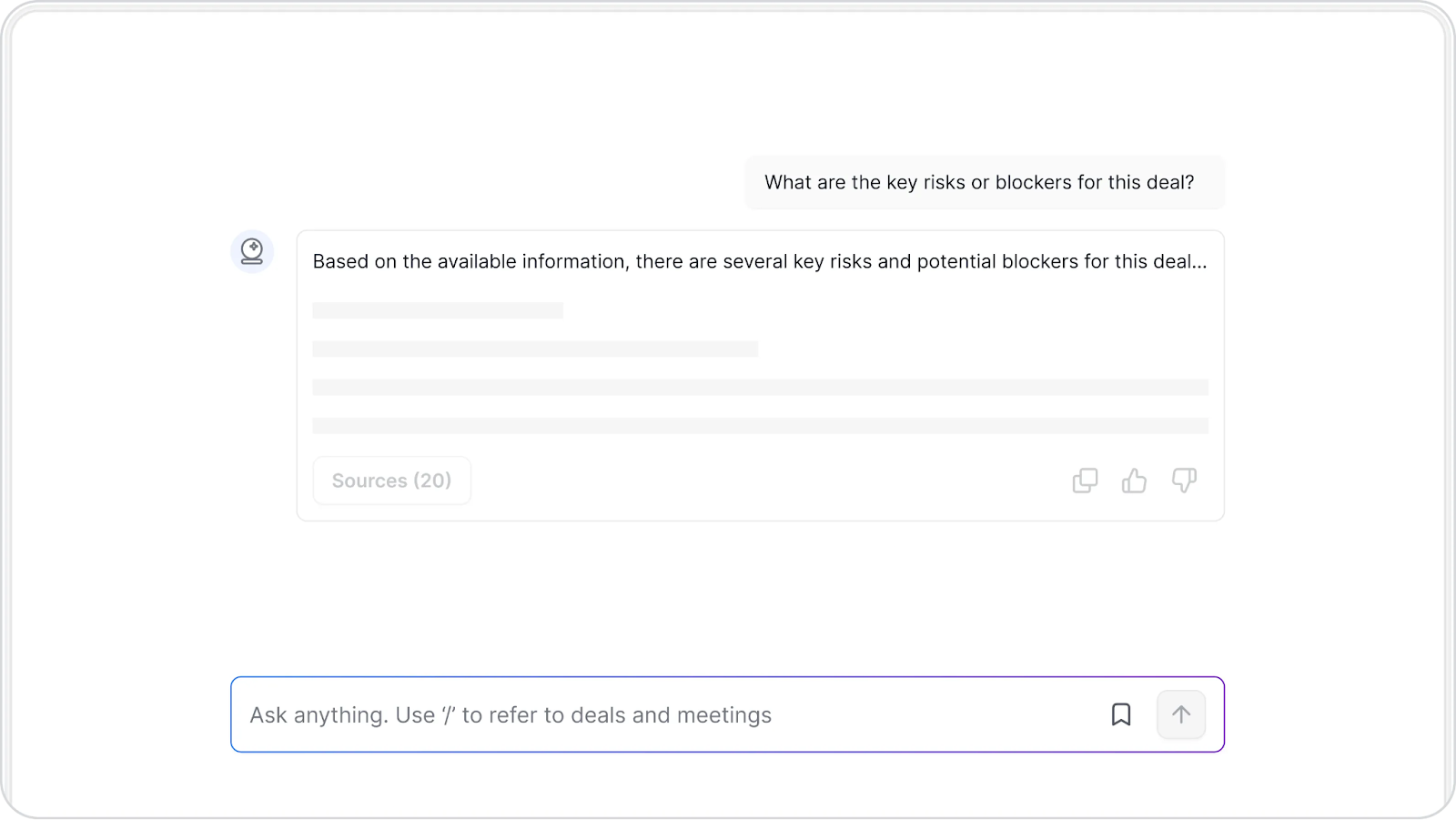
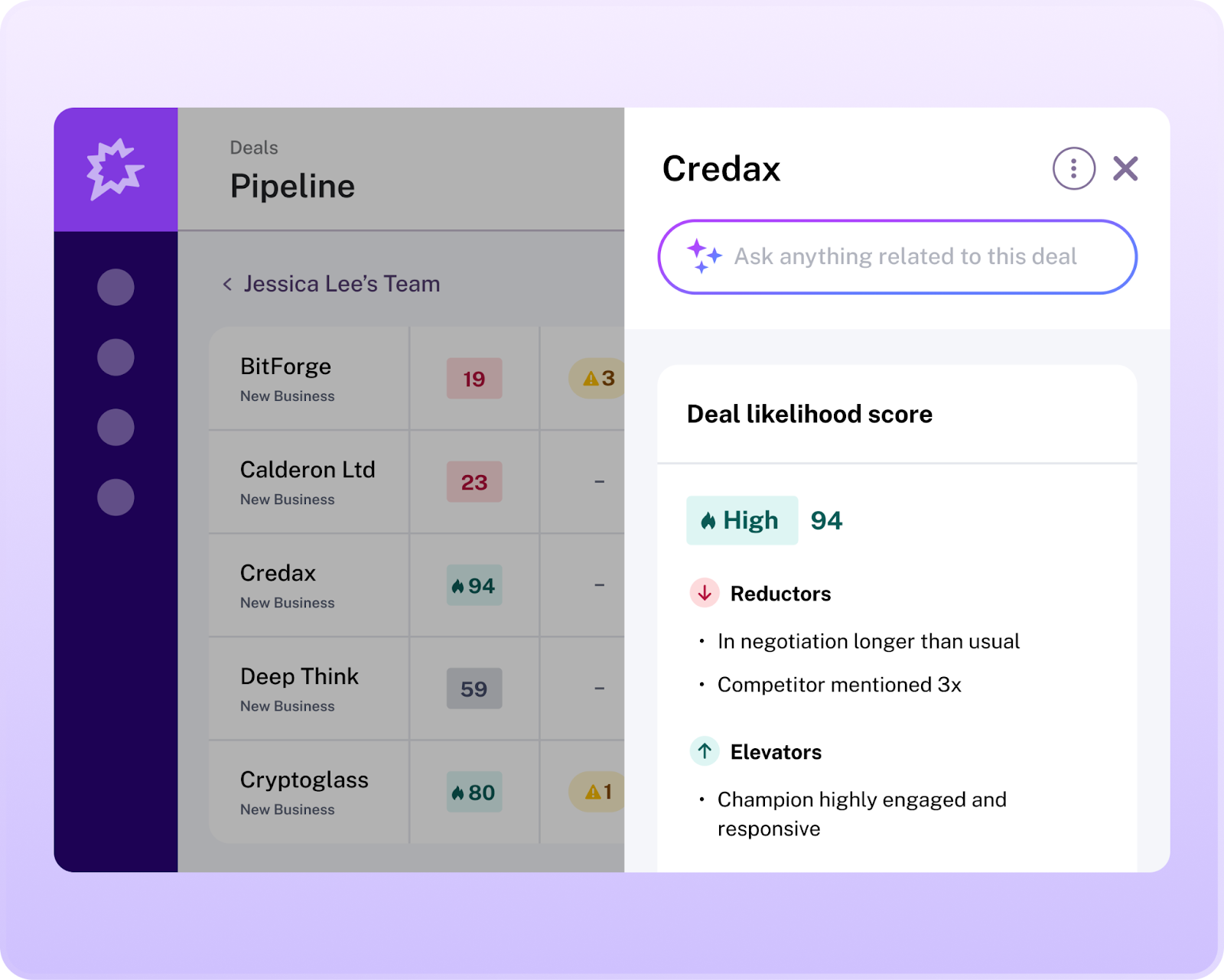
Instead of simply analyzing calls after the fact, Sybill focuses on helping sales teams act on conversation intelligence while deals are still in motion.
This combination of conversation intelligence and workflow automation makes Sybill one of the best revenue intelligence platforms for sales teams that want to reduce admin work, improve forecasting accuracy, and move deals faster.

Also read:
Often considered the legacy leader in the revenue intelligence category.
The Gong revenue intelligence platform built its reputation by turning sales conversations into analyzable data. It provides detailed analytics on call patterns, coaching insights, and deal signals.
Strengths include:
However, some organizations report challenges related to implementation complexity and cost. Many newer platforms also emphasize automation capabilities that go beyond conversation analysis.
Also read:
Clari focuses heavily on forecasting and revenue operations visibility.
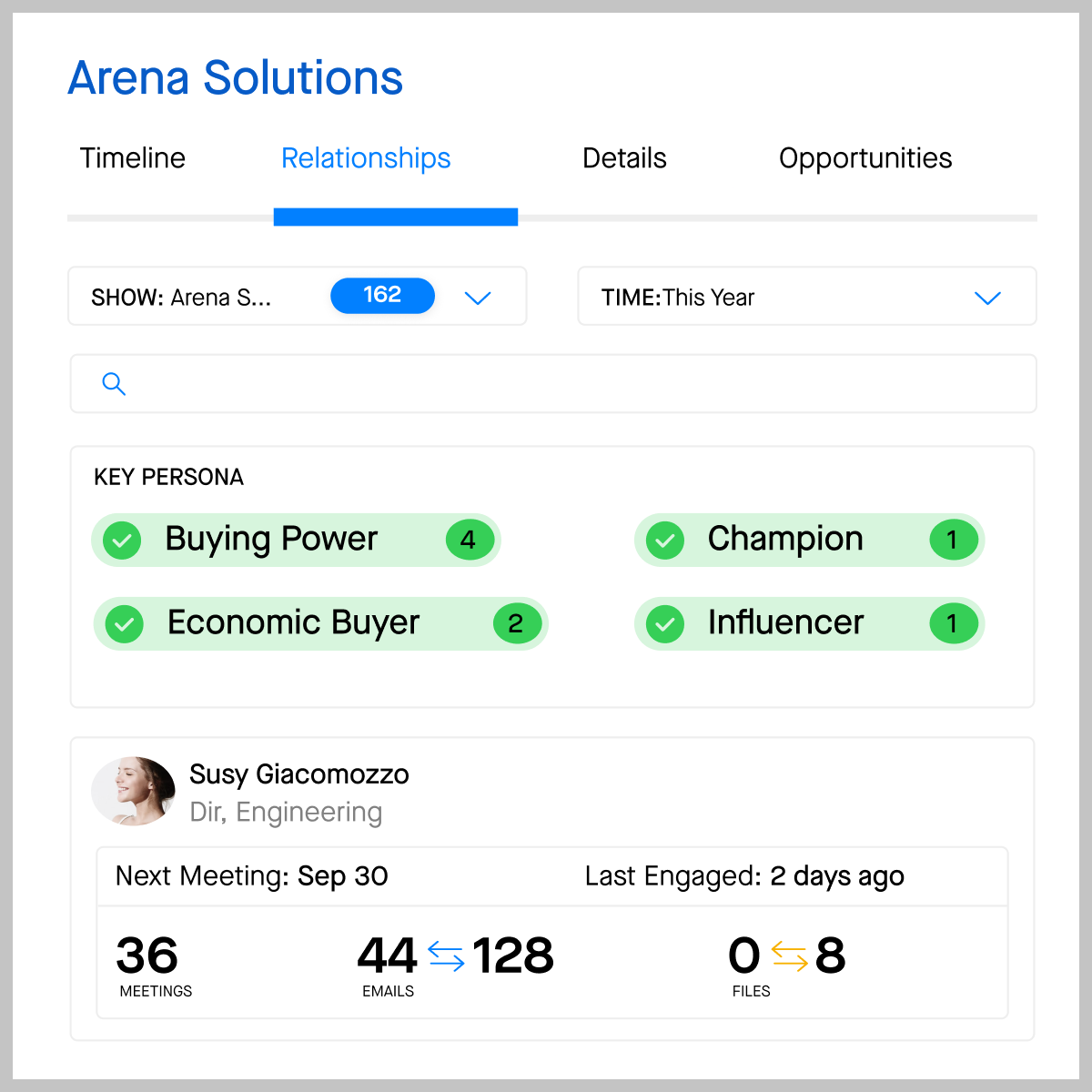
While some revenue intelligence platforms focus on conversation insights, Clari is designed primarily for pipeline visibility and forecasting accuracy.
However, Clari relies more heavily on structured pipeline data rather than deep conversation analysis. That can miss buyer intent by a long shot.
People.ai focuses on activity capture and CRM data enrichment.
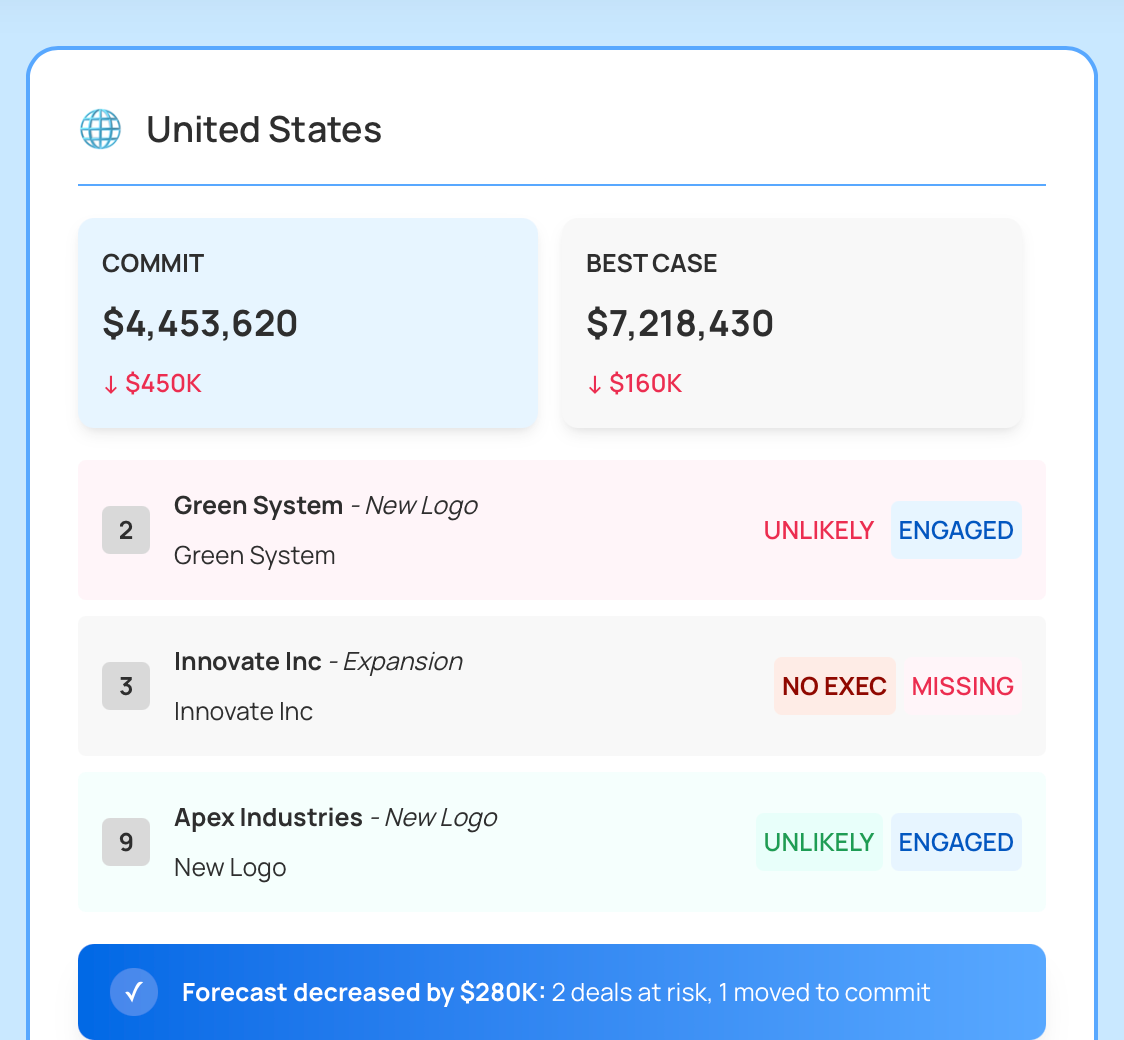
The platform automatically captures sales activities such as meetings, emails, and CRM interactions to improve pipeline visibility and data accuracy.
However, the platform places less emphasis on conversation-level insights compared to platforms designed primarily for revenue intelligence. This can remove accuracy from forecasts.
Revenue.io positions itself as a revenue execution platform combining conversation intelligence with sales engagement workflows.
.png)
The platform works well for organizations focused on outbound calling workflows, though it offers a narrower set of capabilities compared with full revenue intelligence platforms.
Salesloft is widely known as a sales engagement platform but also includes conversation intelligence features.
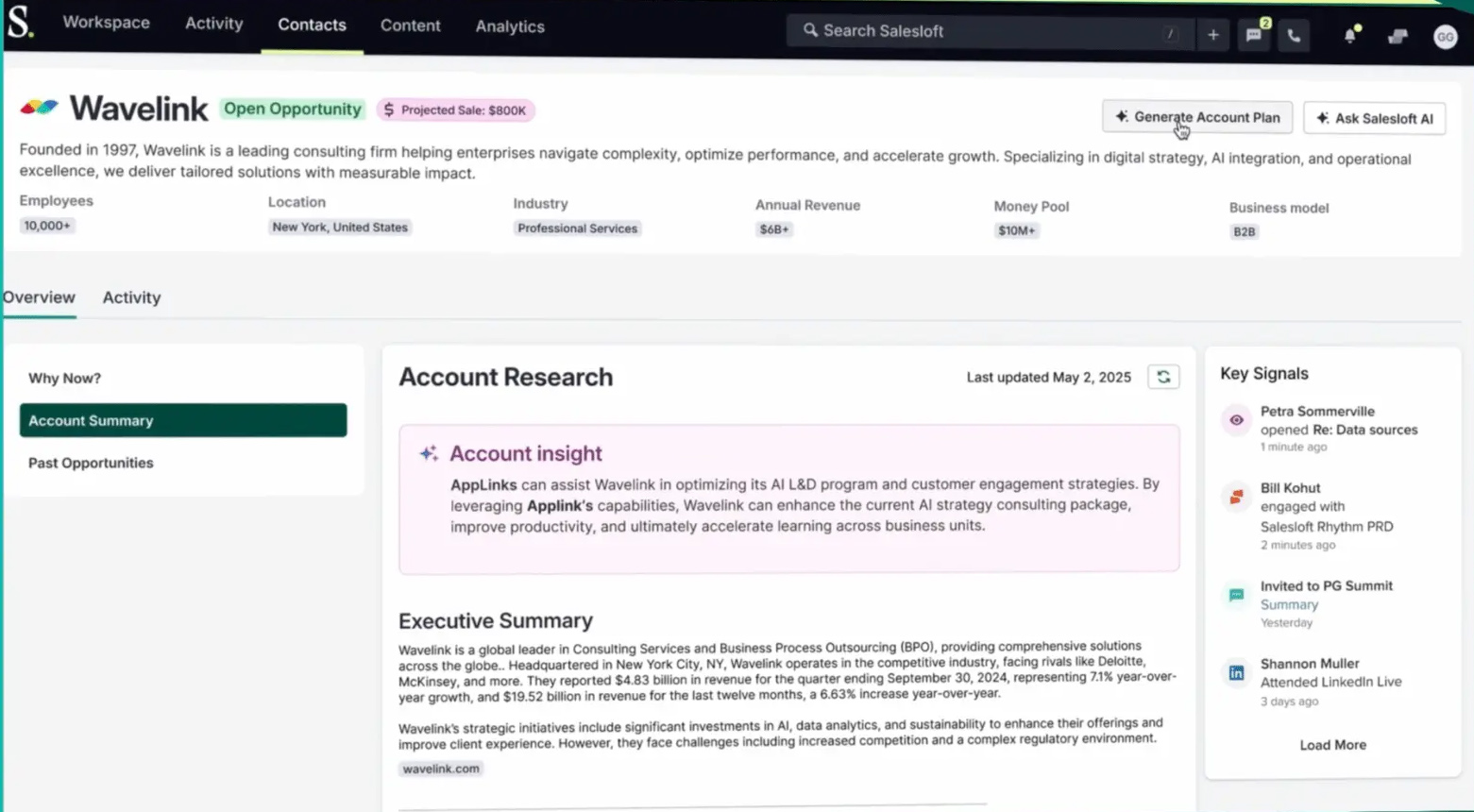
However, revenue intelligence capabilities are typically secondary to engagement workflows within the platform.
The revenue intelligence category has evolved significantly over the past few years.
Early tools answered a simple question: What happened on the call?
Modern platforms answer much bigger questions.
What does this conversation mean for the deal?
What risks are emerging in the pipeline?
What should the rep do next?
According to McKinsey, organizations that integrate AI into sales workflows can see productivity improvements of up to 50 percent.
But that value only appears when revenue intelligence platforms move beyond passive analytics.
The best revenue intelligence platforms now deliver five critical capabilities.
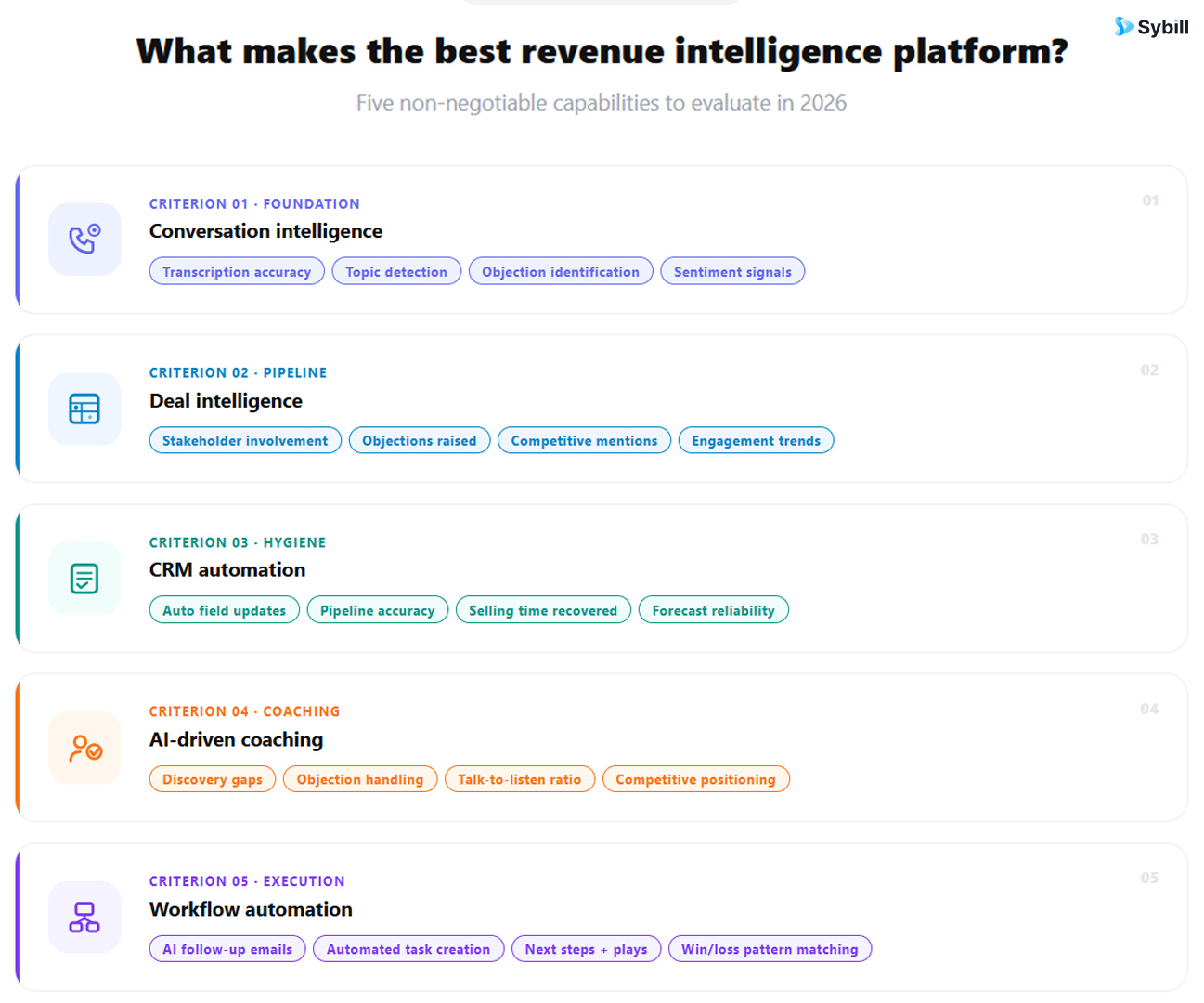
Conversation intelligence remains the foundation of revenue intelligence.
The platform should automatically capture and analyze sales conversations, including:
Without strong conversation intelligence, downstream insights become unreliable.
Conversation insights become powerful when they connect directly to pipeline performance.
Deal intelligence analyzes how conversations affect deal health, including signals such as:
This allows revenue teams to identify risk earlier in the sales cycle.
Manual CRM updates remain one of the biggest productivity drains in sales.
When platforms automatically capture deal insights and update CRM records, sales reps regain valuable selling time.
CRM automation also improves forecasting accuracy by ensuring pipeline data reflects real customer conversations.
Also read:
Revenue intelligence platforms should surface coaching insights automatically.
Examples include identifying:
These insights allow managers to coach using real customer conversations instead of anecdotal feedback.
The newest generation of platforms goes one step further by automating actions.
Examples include:
This is where modern AI-first platforms differentiate themselves from earlier conversation intelligence tools.
Selecting the best revenue intelligence platform for sales teams requires looking beyond feature lists.
Revenue intelligence platforms influence how sales teams capture insights, manage pipeline health, and execute deals.
B2B organizations should evaluate five key factors when comparing platforms.
The platform should accurately capture insights from sales conversations.
Evaluate whether it can identify:
These signals often reveal deal risk much earlier than CRM updates.
Many platforms analyze conversations. Fewer platforms turn those insights into immediate actions.
Look for automation capabilities such as:
These features reduce administrative work and increase rep productivity.
Revenue intelligence platforms should strengthen forecasting accuracy.
Key capabilities include:
Platforms that combine conversation insights with pipeline analysis provide stronger forecasting signals.
The most sophisticated platform in the world will fail if sales reps avoid using it.
Tools that automate note taking, CRM updates, and follow-ups are far more likely to achieve strong adoption.
Some legacy platforms require significant RevOps resources to deploy and maintain.
AI-first platforms often deploy faster and require less manual configuration.
Organizations should evaluate both technical complexity and operational overhead when choosing a platform.
Forecasting remains one of the hardest problems in revenue leadership.
Research from InsightSquared indicates that only a small portion of companies consider their forecasts highly accurate.
Revenue intelligence platforms improve forecasting by connecting conversation signals directly to pipeline outcomes.
When evaluating platforms specifically for forecasting, focus on three capabilities.
Forecast accuracy improves dramatically when leaders understand how buyers are engaging with deals.
Look for platforms that track:
These signals often reveal deal health more clearly than stage progression alone.
Forecasting improves when deal insights come from real conversations rather than manual CRM updates.
Platforms should surface signals such as:
These insights help revenue leaders assess the true probability of closing deals.
The most advanced platforms analyze patterns across multiple deals to identify broader trends.
Examples include:
This level of intelligence helps revenue leaders move from reactive forecasting to proactive pipeline management.
Sales teams generate enormous amounts of activity data today.
But data alone does not close deals.
Revenue intelligence platforms transform scattered signals into insights that help teams understand what is really happening inside their pipeline.
The best revenue intelligence platforms combine conversation intelligence, deal analytics, CRM automation, and AI-driven workflow automation.
Platforms that only analyze calls are quickly becoming table stakes.
Platforms that turn conversation insights into immediate action are defining the future of revenue operations.
That shift is exactly why many modern sales teams are adopting platforms like Sybill, where conversation intelligence connects directly to CRM automation, follow-up generation, and deal guidance.
For organizations that want revenue intelligence to drive action rather than reporting, the difference becomes clear very quickly.
A revenue intelligence platform analyzes sales conversations and pipeline activity to provide insights that improve forecasting, deal execution, and sales coaching. These platforms capture signals from calls, meetings, and emails to help revenue teams understand buyer behavior and pipeline health.
Some of the best revenue intelligence platforms in 2026 include Sybill, Gong, Clari, People.ai, Revenue.io, and Salesloft. Each platform focuses on different capabilities such as conversation intelligence, forecasting, CRM automation, or sales engagement.
Sales teams use revenue intelligence platforms to improve forecasting accuracy, identify deal risks early, automate CRM updates, and gain insights from customer conversations. These platforms help revenue teams make better decisions and close deals more consistently.
A revenue intelligence platform analyzes sales conversations and pipeline activity to provide insights that improve forecasting, deal execution, and sales coaching. These platforms capture signals from calls, meetings, and emails to help revenue teams understand buyer behavior and pipeline health.
Some of the best revenue intelligence platforms in 2026 include Sybill, Gong, Clari, People.ai, Revenue.io, and Salesloft. Each platform focuses on different capabilities such as conversation intelligence, forecasting, CRM automation, or sales engagement.
Sales teams use revenue intelligence platforms to improve forecasting accuracy, identify deal risks early, automate CRM updates, and gain insights from customer conversations. These platforms help revenue teams make better decisions and close deals more consistently.





.avif)
