Find us at booth #83, join us for a harbor side happy hour, or catch Gorish’s talk.

Sept, 16-18 > Learn more


Tamanna Mishra

March 25, 2026
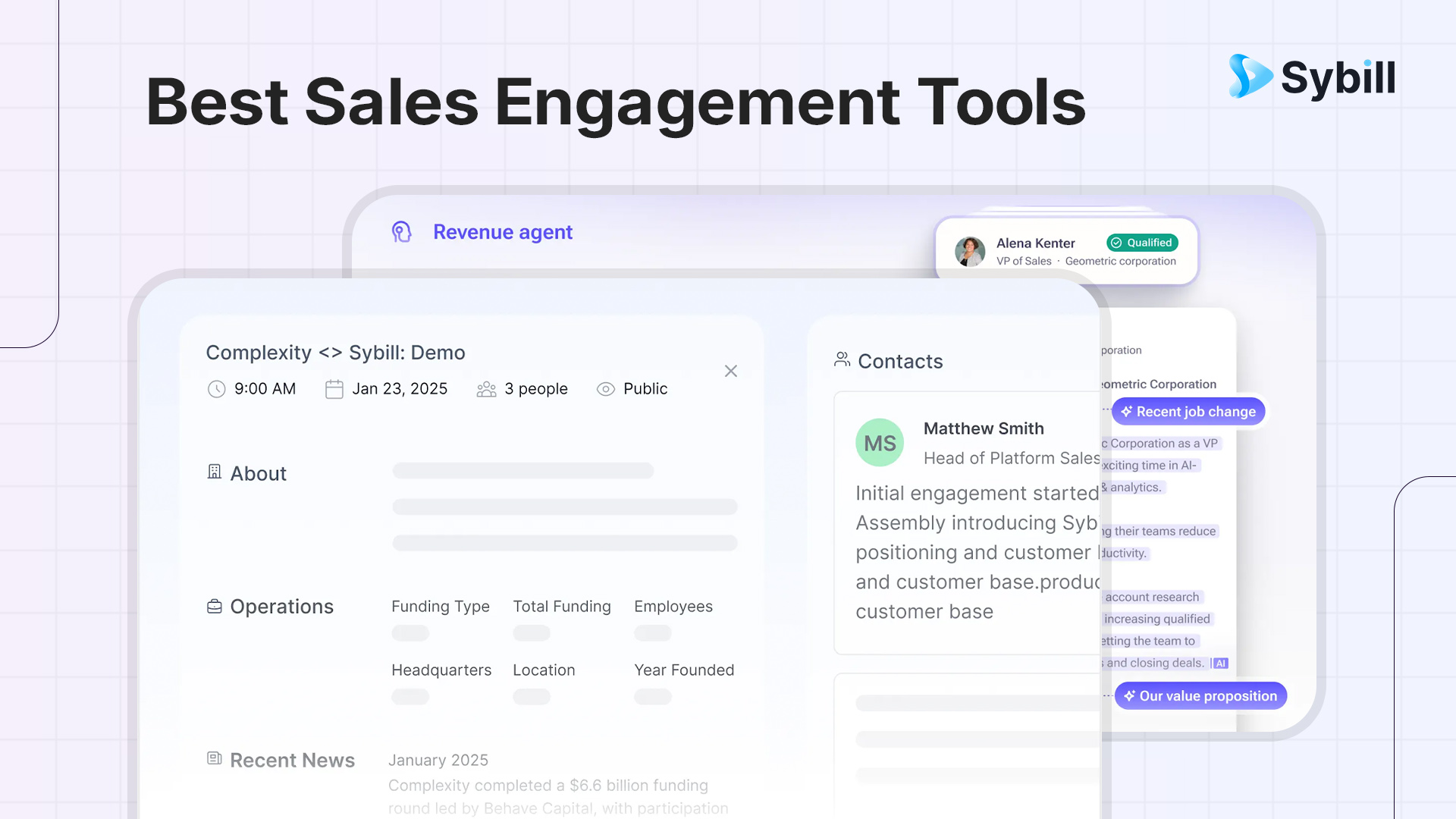
Sales reps today send hundreds of emails, LinkedIn messages, and follow ups every week.
Most of them disappear into silence.
Modern outreach sometimes feels like the final battle scene in an Avengers movie. Everyone is firing messages. Notifications are exploding everywhere. But somehow, the person you are actually trying to reach never hears you.
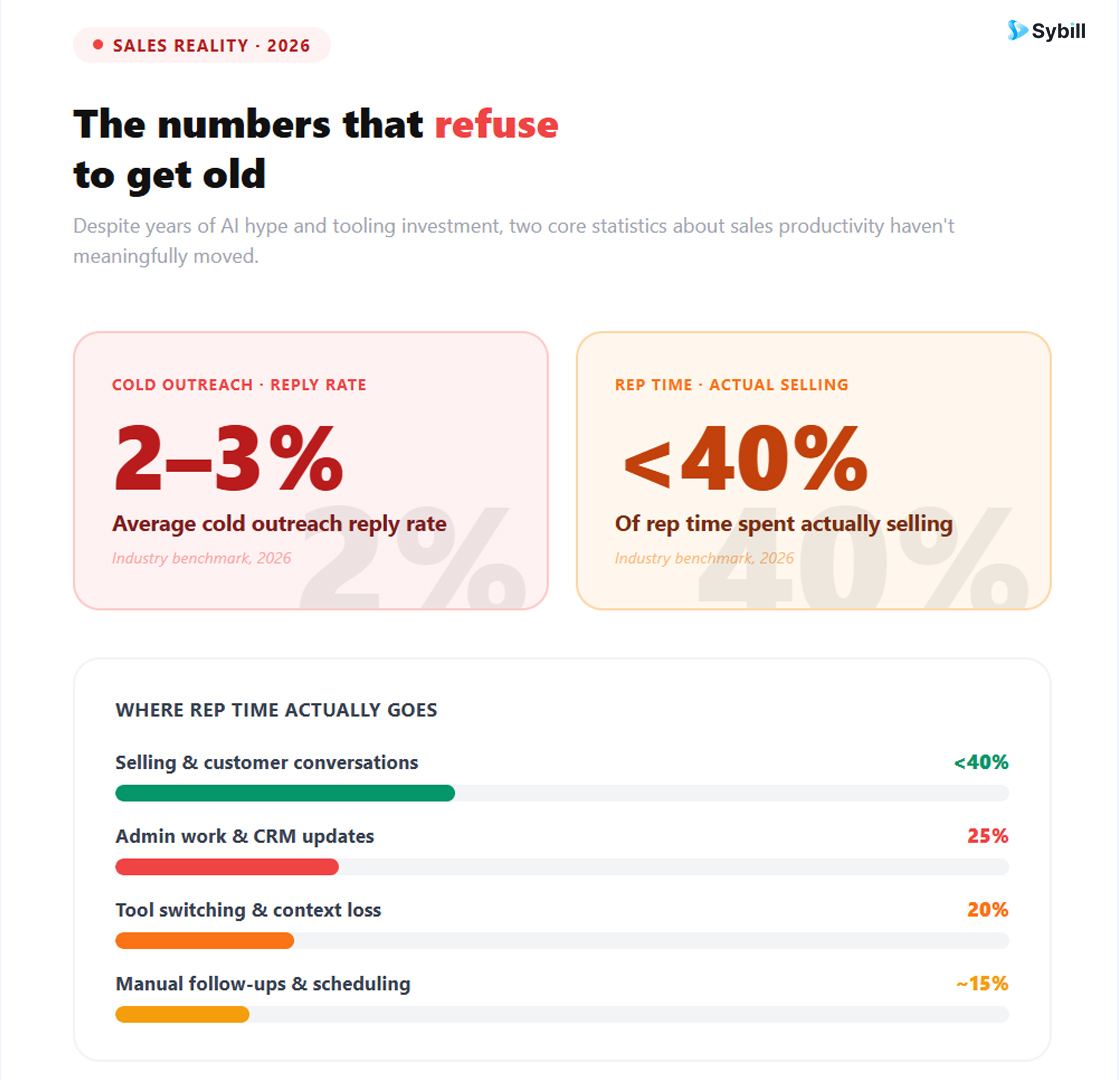
The reality is brutal. Cold outreach reply rates average around 2–3 percent, and despite the AI hyper, sales reps continue to spend less than 40 percent of their time actually selling. In 2026 too, that statistic refuses to get old. 60% of rep time continues to disappear into the void of admin work, tool switching, and manual follow ups.
The problem is not effort.
The problem is fragmented engagement infrastructure.
Most sales teams juggle a chaotic stack of tools just to manage a single customer interaction:
CRM systems
email tools
call platforms
LinkedIn outreach
note taking apps
follow up reminders
pipeline updates
Each tool captures a piece of the conversation, but none of them orchestrate the entire engagement workflow.
A modern sales engagement platform connects outreach, conversations, follow ups, and CRM updates into a single coordinated system. Instead of scattered activities, every interaction becomes part of a structured engagement process.
In this guide, we break down:
Not every team needs the same sales engagement platform.
Some teams prioritize AI insights. Others care about outbound automation, CRM alignment, or prospecting data. The best approach is to match the tool to your sales motion.
Below is a quick comparison of the best sales engagement tools based on common use cases.
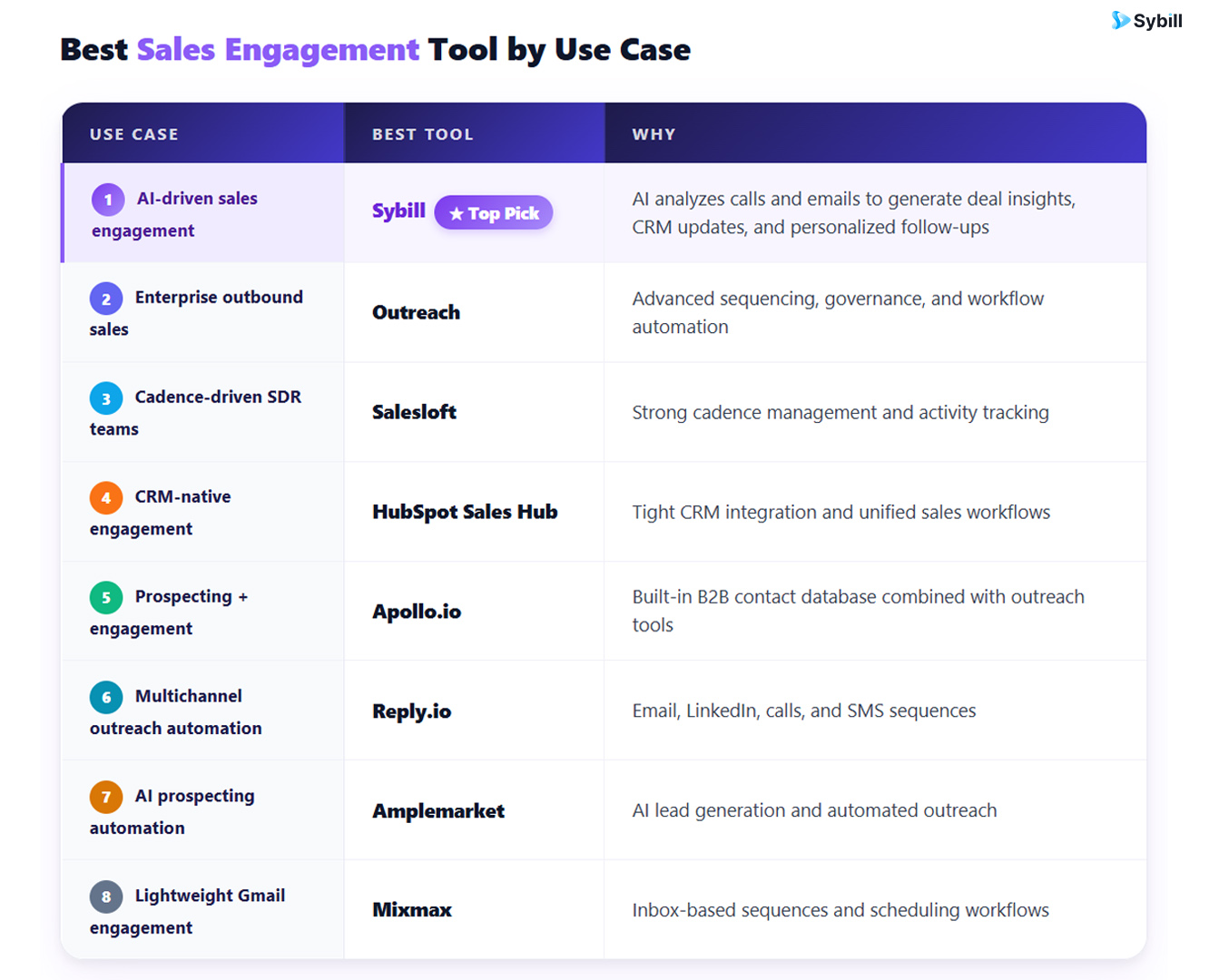
This quick view helps narrow the field.
Now let’s step back and look at how sales engagement tools have evolved, and why the newest generation of platforms is moving beyond simple outreach automation.
The category of sales engagement tools did not appear overnight. It evolved in response to how sales teams actually work.
Each generation solved a different problem.
Early tools helped reps send more messages.
Modern platforms help teams understand buyer behavior and act on it.
Understanding this evolution makes it much easier to evaluate the best sales engagement tools today.
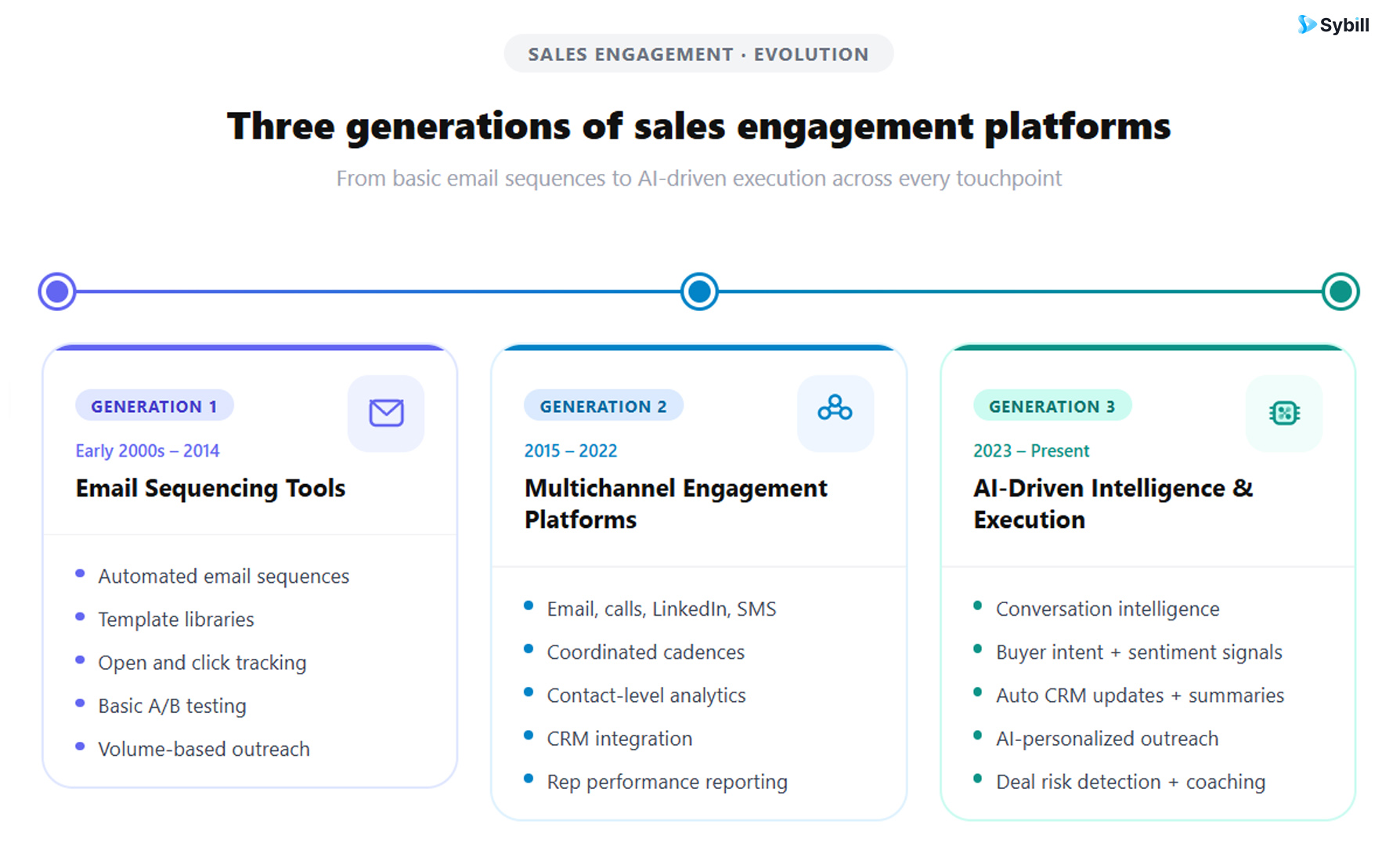
The first generation of sales engagement tools focused almost entirely on outbound email automation.
Tools like Mailshake and other early outbound platforms helped reps send large volumes of cold emails without manually writing every message.
The value proposition was simple: scale outreach.
Sales teams could create email sequences, schedule follow ups, and track basic metrics like opens and replies.
For the first time, outbound sales became predictable and repeatable.
But these tools had a major limitation.
They focused on sending messages, not understanding conversations.
Reps still had to manually interpret replies, track engagement signals, and update their CRM. There was little visibility into what buyers actually cared about.
The next generation expanded the scope of sales engagement platforms beyond email.
Platforms like Outreach, Salesloft, and Reply introduced multichannel engagement workflows that combined:
email
calls
LinkedIn outreach
automated sequences
This allowed sales teams to coordinate outreach across multiple touchpoints instead of relying only on email.
Sales leaders also gained better visibility into activity metrics such as call volume, email response rates, and sequence performance.
These platforms significantly improved outbound productivity.
But they still relied heavily on manual interpretation.
Sales reps still needed to analyze conversations themselves, determine buyer intent, and decide what to do next.
Also read:
The newest generation of sales engagement tools moves beyond automation.
Instead of simply sending messages, these platforms analyze engagement signals and guide the next best action.
Platforms like Sybill represent this shift toward AI-driven engagement intelligence.
These platforms combine several capabilities:
conversation intelligence that analyzes sales calls
automatic CRM updates through tools like CRM Autofill
AI-generated follow ups and contextual emails
buyer signal detection across calls and email conversations
The goal is no longer just activity automation.
The goal is understanding engagement and guiding sales strategy in real time.
This shift is redefining what teams expect from a modern sales engagement platform.
Most sales engagement tools comparison articles simply list features.
Email sequences. Call tracking. CRM integrations.
But features alone rarely help buyers choose the right platform.
What actually matters is workflow impact.
A good sales engagement platform should not just add more features to your stack. It should remove friction from the sales process, automate repetitive work, and help reps focus on the conversations that actually move deals forward.
To make this comparison meaningful, we evaluate each platform using five criteria that directly affect how sales teams operate day to day.
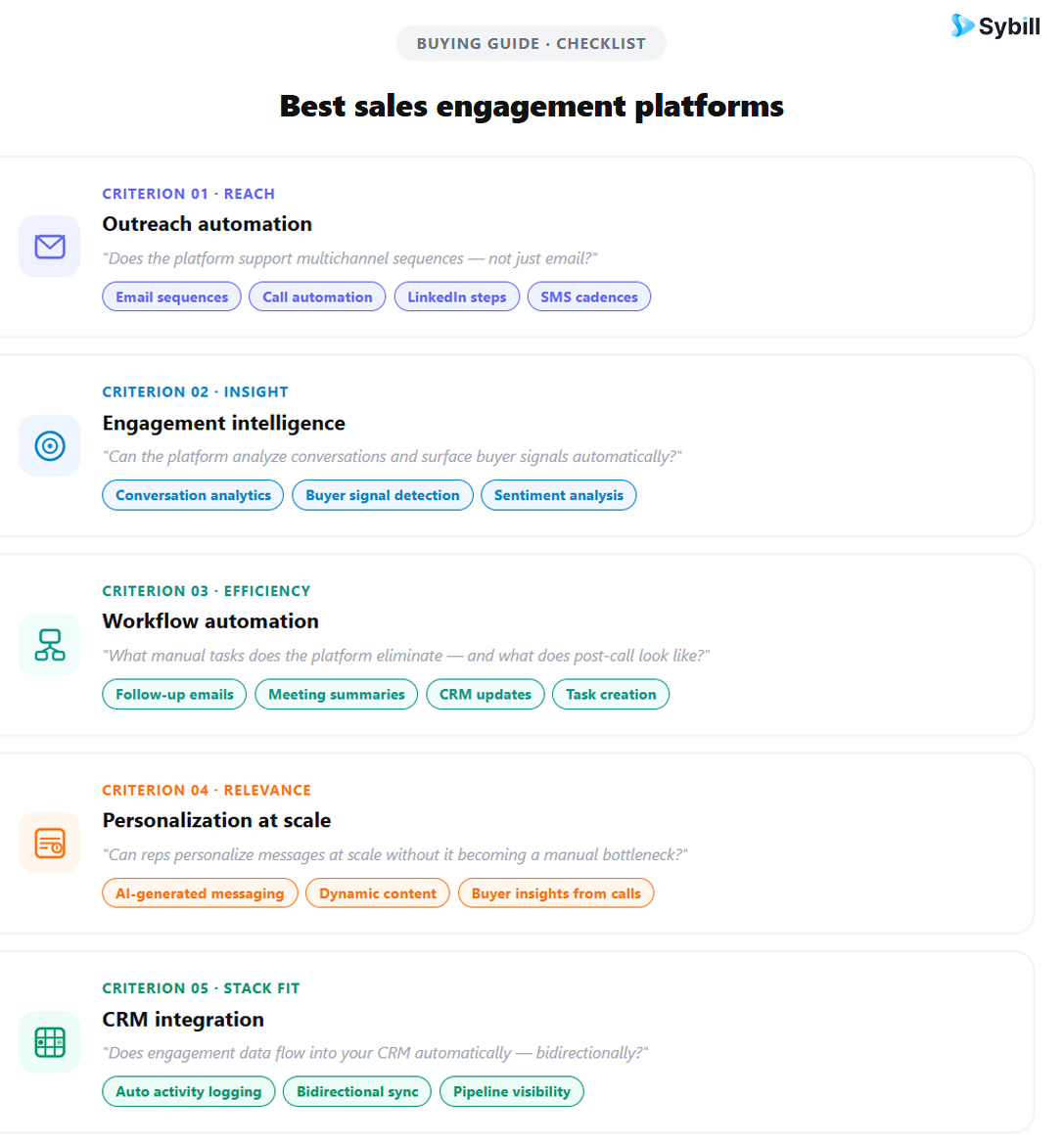
At the most basic level, sales engagement tools must help teams automate outreach.
Look for platforms that support multichannel sequences rather than isolated email campaigns.
Effective outreach automation should coordinate communication across:
Calls
SMS
The goal is simple: ensure every prospect receives consistent, structured follow ups without reps manually tracking every touchpoint.
Strong outreach automation helps teams scale outbound activity while maintaining consistency across the pipeline.
Automation alone is not enough.
Modern sales engagement platforms also need to understand what is happening inside buyer conversations.
Engagement intelligence refers to the platform’s ability to analyze interactions and surface insights from them.
Key capabilities include:
Conversation analytics
Buyer signal detection
Sentiment analysis
Instead of forcing reps to manually review every interaction, the platform should highlight meaningful signals such as buyer objections, interest indicators, or potential deal risks.
One of the biggest productivity killers in sales is manual administrative work.
Updating CRM fields. Writing follow up emails. Creating reminders. Logging meeting notes.
The best sales engagement tools automate these tasks so reps can focus on selling.
Look for platforms that automate:
Follow up emails
Meeting summaries
CRM updates
Task creation and execution
When workflow automation is done well, sales reps spend far less time switching between tools and more time engaging with buyers.
Personalization has become one of the most important factors in modern sales outreach.
Generic templates no longer work.
A strong sales engagement platform should help reps personalize outreach without dramatically increasing workload.
Key capabilities include:
AI-generated messaging
Dynamic content personalization
Buyer insights from past conversations
This allows sales teams to deliver relevant messages while still maintaining scalable outreach.
Also read:
Finally, CRM integration determines how well the engagement platform fits into the broader sales tech stack.
Without strong integration, teams end up duplicating work across multiple tools.
The best platforms offer:
Automatic activity logging
Bidirectional CRM synchronization
Pipeline visibility
When CRM integration works properly, engagement data flows seamlessly into the revenue pipeline, giving sales leaders accurate insight into deal progress.
Choosing the right platform becomes much easier when you compare the best sales engagement tools across a consistent framework.
For this sales engagement tools comparison, we evaluated platforms based on:
The goal is not simply to identify tools that send more messages. The goal is to identify platforms that help sales teams manage and improve the entire engagement lifecycle.
Below is a high-level comparison of the leading sales engagement platforms in 2026.
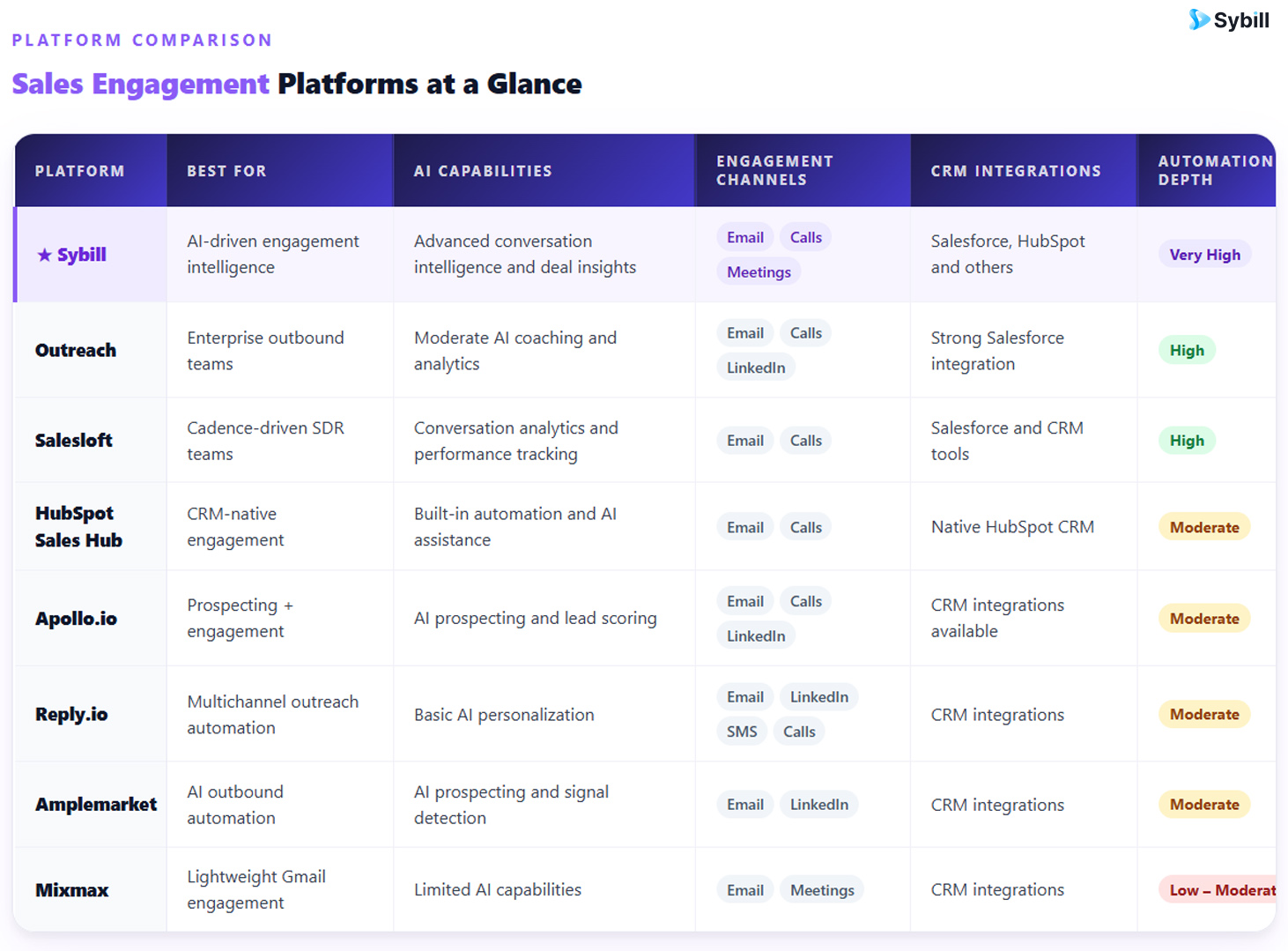
While several tools automate outreach effectively, only a few platforms go deeper into conversation intelligence, CRM automation, and engagement insights.
That distinction becomes clearer when we examine each platform in detail.
The best sales engagement tools today do far more than schedule emails.
Modern platforms help sales teams analyze conversations, capture buyer signals, automate follow ups, and maintain accurate CRM data without manual updates.
For this guide, we evaluated each platform based on the workflow criteria discussed earlier: outreach automation, engagement intelligence, personalization capabilities, and CRM integration.
Below are the leading platforms sales teams are using in 2026.
Best AI-driven sales engagement platform
Sybill represents the newest generation of sales engagement platforms. Instead of focusing purely on outreach automation, it analyzes conversations and engagement signals to guide the next best sales action.
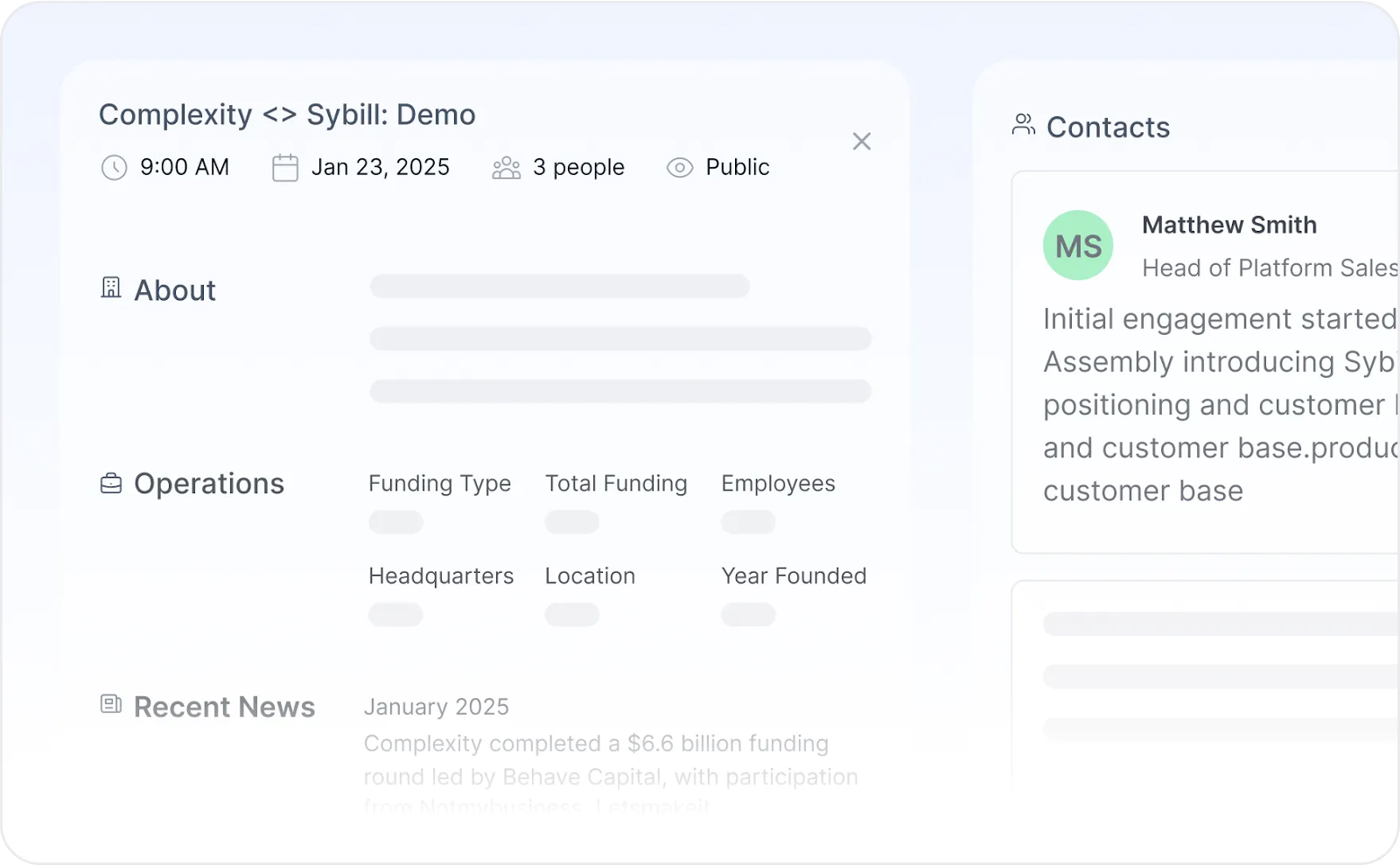
Key capabilities include:
What makes Sybill stand out is its ability to capture engagement signals from both calls and emails. Instead of forcing reps to manually analyze conversations, the platform automatically generates contextual follow ups, detects buyer intent, and updates CRM records in the background.
This dramatically reduces administrative work while improving deal visibility for sales leaders.
Best for

Best for enterprise outbound teams
Outreach is one of the most widely adopted enterprise sales engagement platforms.
Its core strength lies in advanced sequencing and workflow automation that supports large outbound teams.
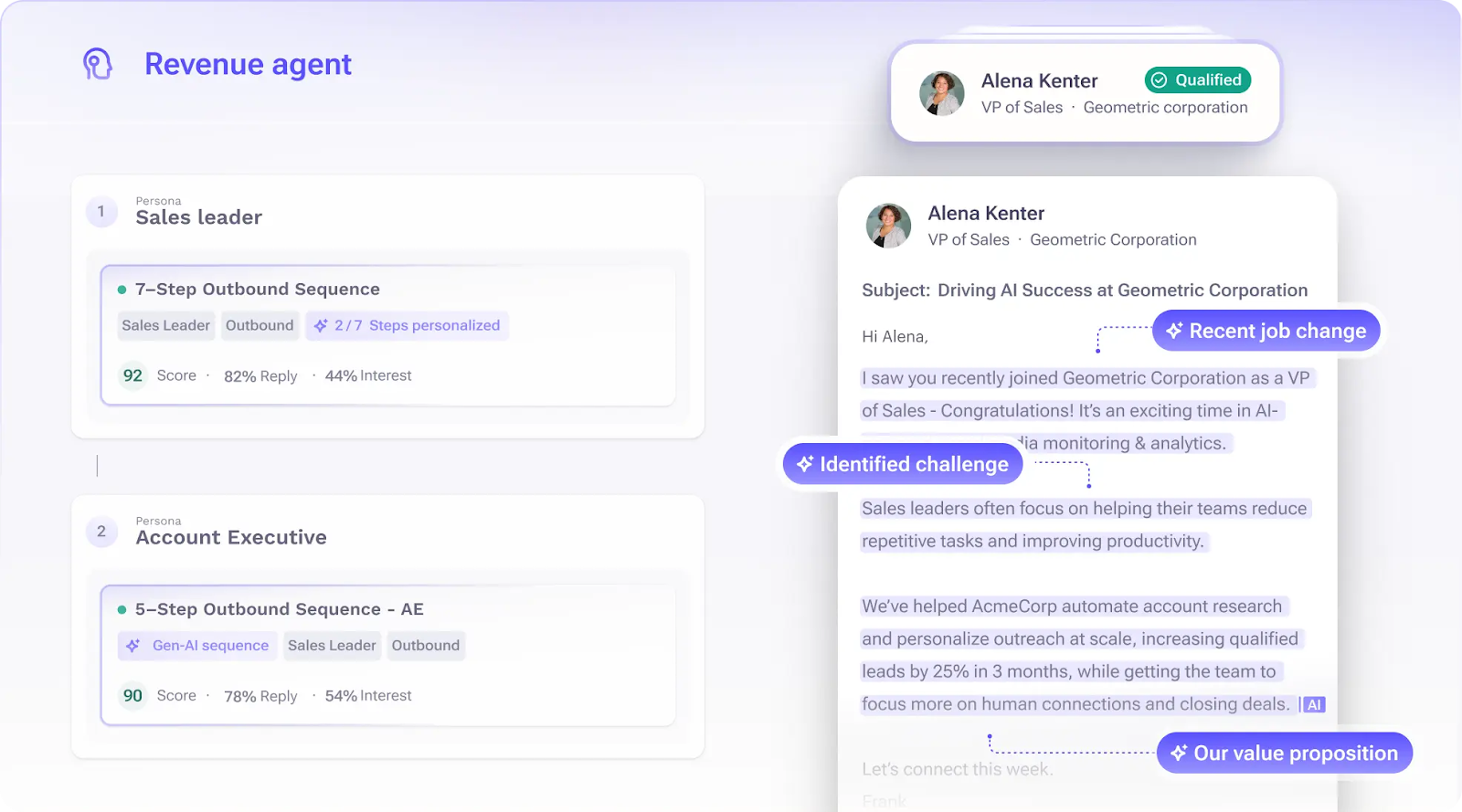
Strengths include:
However, Outreach implementations can be complex. The platform typically requires dedicated RevOps support to manage sequences, workflows, and governance structures.
Tradeoffs
Best for cadence-driven SDR teams
Salesloft focuses heavily on structured outbound cadences and activity management for sales development teams.
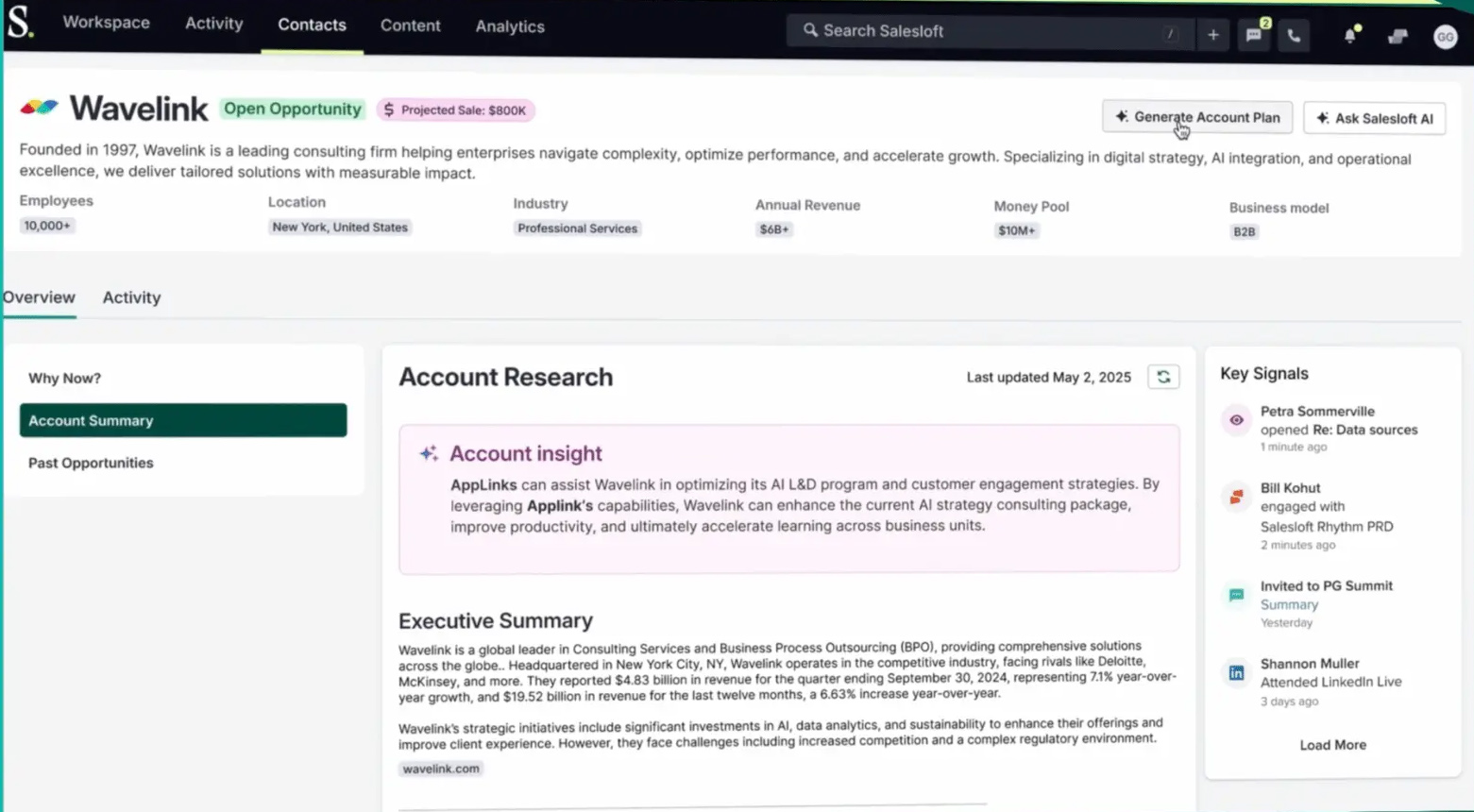
Its strengths include:
Salesloft works best in organizations with well-defined outbound processes and dedicated SDR teams.
Limitations
Best CRM-native engagement platform
HubSpot Sales Hub integrates engagement workflows directly into the HubSpot CRM environment.
This makes it especially attractive for companies already using the HubSpot ecosystem.
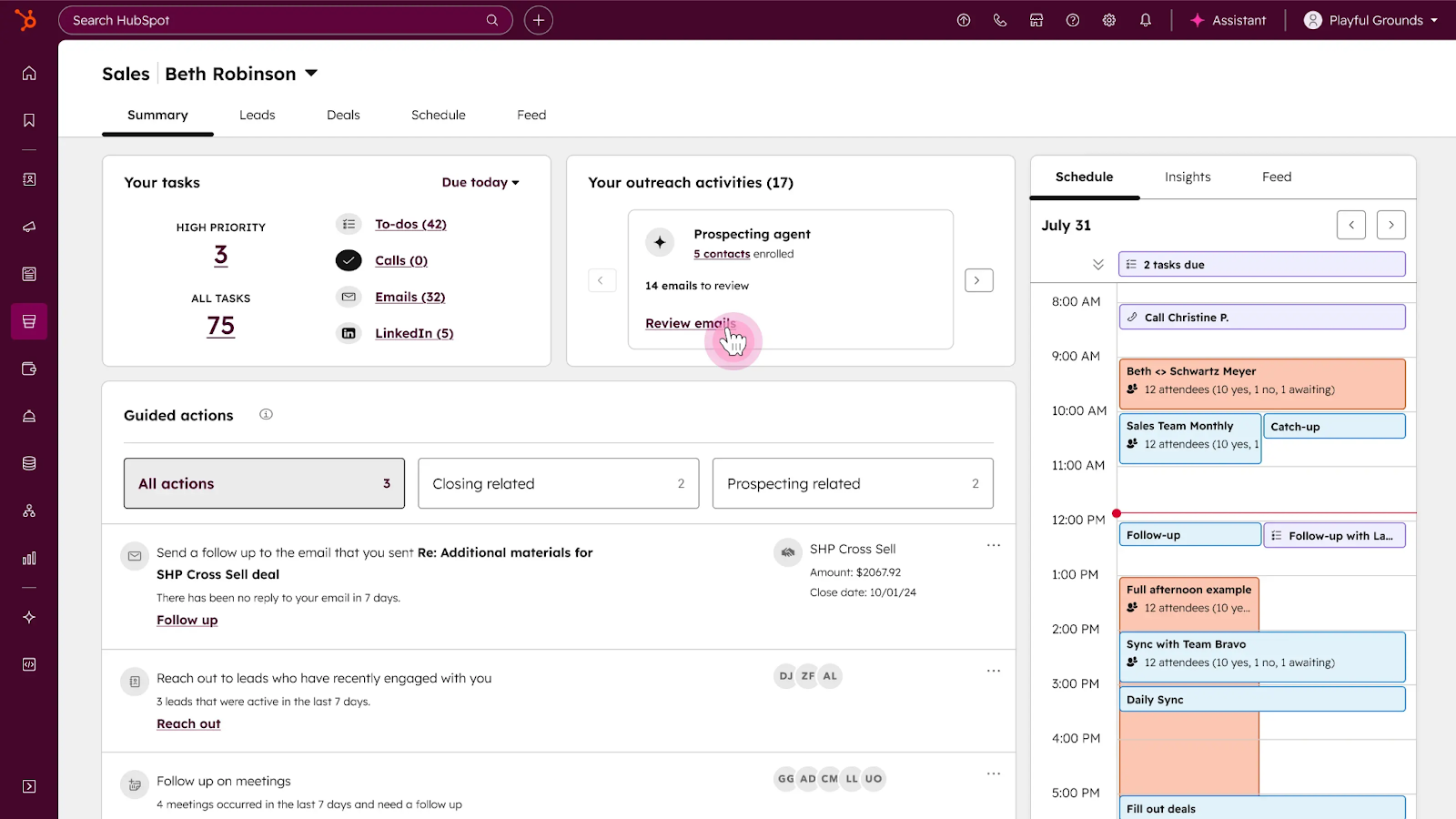
Strengths include:
Limitations
less flexibility for complex enterprise sales operations
Best prospecting plus engagement platform
Apollo combines a large B2B contact database with outreach automation tools.
This makes it particularly appealing for outbound teams that want prospecting and engagement capabilities in a single platform.
.png)
Strengths include:
Limitations
Best multichannel outreach automation
Reply.io focuses on coordinating outreach across multiple communication channels.
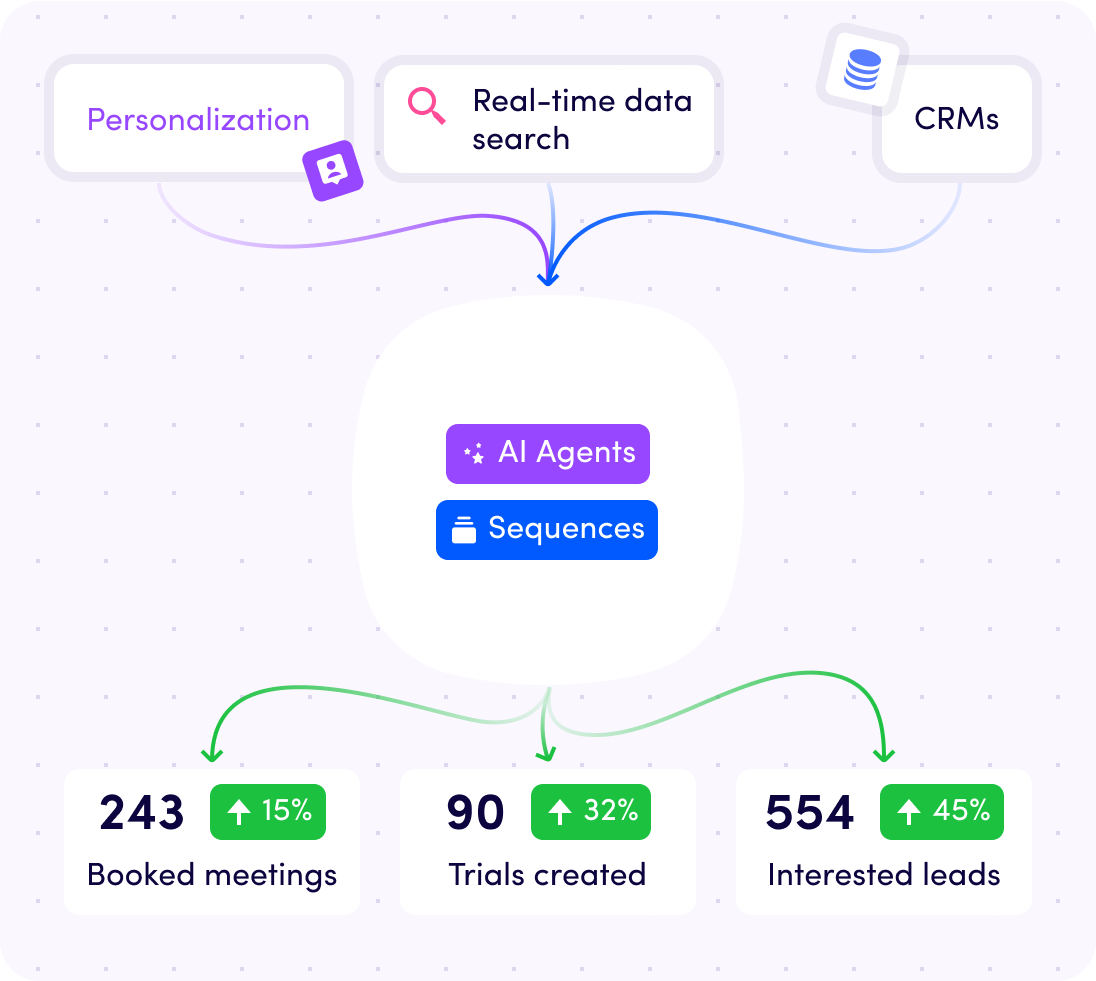
Supported channels include:
email
LinkedIn
SMS
calls
This makes it useful for teams running high-volume outbound campaigns that require multiple touchpoints.
Limitations
Best AI outbound automation platform
Amplemarket emphasizes AI-driven prospecting and automated outreach.
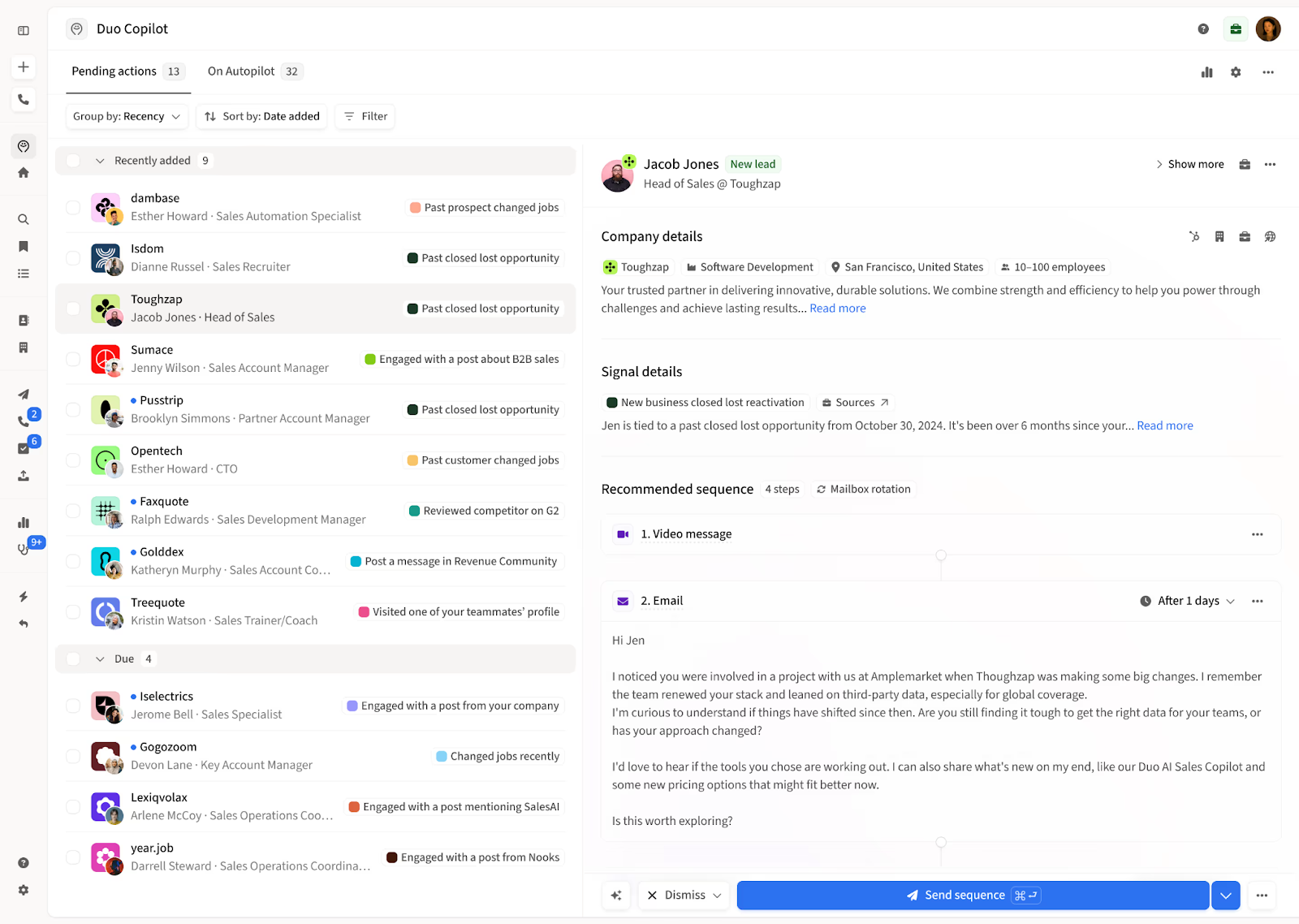
Key strengths include:
This approach works best for organizations that prioritize high-volume outbound prospecting.
Limitations
Best lightweight Gmail engagement platform
Mixmax focuses on enabling sales engagement directly inside the Gmail interface.
This makes it appealing for smaller teams that prefer inbox-based workflows rather than large standalone platforms.
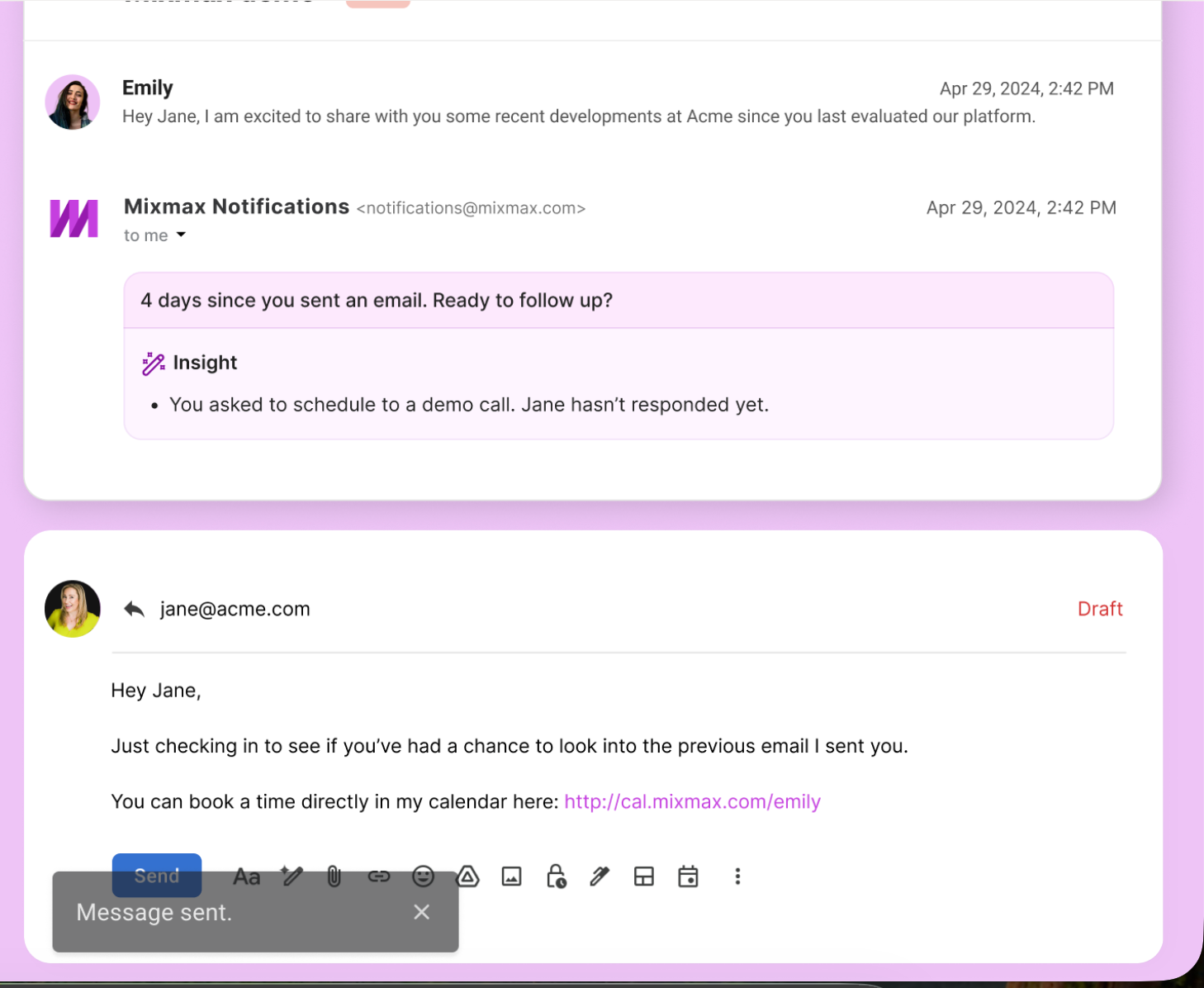
Strengths include:
Limitations
Choosing the best tool for managing sales engagements is not as simple as picking the most popular platform.
Different sales teams operate with different structures, workflows, and technology stacks. The right sales engagement platform depends on several factors, including:
A startup running high-volume outbound will prioritize different capabilities than a mid-market team focused on deal intelligence and personalized conversations.
That is why the best platform varies by use case.
For teams that want to move beyond simple outreach automation, Sybill provides a modern AI-driven approach to managing sales engagement. It analyzes calls and emails, captures buyer signals, generates contextual follow ups, and automatically updates CRM data. Instead of just sending messages, the platform helps sales teams understand engagement and take the right next action.
Outreach is widely used by large outbound teams that rely on structured sequences and workflow automation. It works particularly well for organizations with established RevOps teams and complex outbound processes.
Salesloft is well suited for organizations with defined sales development workflows and cadence-driven outreach. Its structured activity tracking and coaching tools make it popular among teams with dedicated SDR organizations.
In practice, the best sales engagement tools are the ones that align closely with how your sales team actually operates. The right platform should reduce administrative work, improve engagement visibility, and help reps spend more time selling.
A modern sales engagement platform does not operate in isolation. It sits at the center of the sales workflow and connects multiple parts of the revenue stack.
Here is what a typical sales workflow looks like:
Lead generation
↓
Prospecting tools
↓
Sales engagement platform
↓
Meetings and conversations
↓
CRM updates
↓
Pipeline management
In many organizations, engagement platforms primarily manage the prospecting and outreach stages.
They help reps send emails, run sequences, and track responses.
But the sales process does not stop after the first reply.
The real work happens during conversations, follow ups, and deal progression.
This is where traditional engagement tools often fall short.
Most platforms stop at:
Only a few extend into the deeper layers of the workflow, such as:
This is where AI-driven platforms like Sybill expand the role of a sales engagement platform.
Instead of simply automating outreach, it captures signals from conversations, generates contextual follow ups, updates CRM records automatically, and surfaces insights that help sales teams manage deals more effectively.
Selecting the right sales engagement platform comes down to how well it fits your sales motion, workflow, and technology stack.
Use this quick checklist when evaluating tools.
Different platforms work better for different sales models.
Look for platforms that automate repetitive tasks such as:
A strong sales engagement platform should integrate seamlessly with your CRM.
Key features include:
Modern sales engagement tools should support personalization at scale through:
Beyond subscription price, consider:
The best sales engagement platform is the one that reduces administrative work, improves engagement visibility, and helps your team focus more time on selling.
The evolution of sales engagement tools tells a clear story.
First generation platforms focused on email automation.
They helped reps send more messages, faster.
Second generation platforms expanded into multichannel outreach.
Sales teams could coordinate emails, calls, and social touches through structured sequences.
But activity alone does not close deals.
The newest generation of sales engagement tools is built around AI-driven engagement intelligence.
These platforms go beyond outreach automation. They analyze conversations, detect buyer signals, generate contextual follow ups, and guide the next best action.
That shift changes the role of a sales engagement platform.
Instead of simply managing activity, it becomes the system that helps sales teams understand engagement, reduce manual work, and make smarter decisions throughout the pipeline.
And that is exactly how modern revenue teams are starting to operate.
A sales engagement tool helps sales teams manage and automate interactions with prospects and customers across multiple channels.
Instead of juggling emails, calls, LinkedIn messages, and follow ups across different tools, a sales engagement platform brings these activities into a single system.
Typical capabilities include:
The goal is simple: help sales reps engage buyers consistently while reducing manual administrative work.
There is no single platform that fits every team, but the best sales engagement tools typically combine outreach automation with AI-driven insights.
Platforms like Sybill stand out because they go beyond activity automation. In addition to managing outreach, Sybill analyzes sales conversations, captures buyer signals, generates contextual follow ups, and automatically updates CRM records.
Other strong platforms include Outreach and Salesloft for outbound-heavy teams and HubSpot Sales Hub for CRM-centric sales organizations.
The best tool ultimately depends on how your team sells and what level of automation and intelligence you need.
The top sales engagement platform depends on several factors:
For example:
The right platform should align with your workflow and reduce the amount of manual work required to manage sales interactions.
Most sales engagement tools integrate directly with email providers and CRM systems to track engagement signals such as opens, replies, and link clicks.
Advanced platforms go further by connecting email engagement with sales conversations.
For example, Sybill captures insights from both email threads and meeting conversations. It analyzes these interactions to generate contextual follow ups, identify buyer signals, and automatically update CRM records.
This creates a unified engagement view instead of separating email activity from the rest of the sales workflow.
Several platforms provide AI-powered capabilities within the sales engagement tools category.
Popular options include:
Each platform approaches AI differently, so the best choice depends on whether your priority is outreach automation, prospecting intelligence, or deeper conversation insights.
Hyperpersonalization requires more than just inserting a prospect’s name into an email template.
The best sales engagement platforms use engagement data and AI insights to tailor communication based on actual buyer behavior.
Platforms like Sybill lead in this area because they analyze conversations, emails, and meeting interactions to understand buyer intent. This allows sales reps to generate personalized follow ups based on real context rather than generic templates.
As AI becomes more integrated into sales workflows, hyperpersonalization is quickly becoming a defining capability of the most advanced sales engagement tools.
A sales engagement tool helps sales teams manage and automate interactions with prospects and customers across multiple channels. Instead of juggling emails, calls, LinkedIn messages, and follow ups across different tools, a sales engagement platform brings these activities into a single system. Typical capabilities include: multichannel outreach such as email, calls, and social selling automated sequences and follow ups email tracking and engagement analytics meeting summaries and conversation insights workflow automation and CRM integration The goal is simple: help sales reps engage buyers consistently while reducing manual administrative work.
There is no single platform that fits every team, but the best sales engagement tools typically combine outreach automation with AI-driven insights. Platforms like Sybill stand out because they go beyond activity automation. In addition to managing outreach, Sybill analyzes sales conversations, captures buyer signals, generates contextual follow ups, and automatically updates CRM records. Other strong platforms include Outreach and Salesloft for outbound-heavy teams and HubSpot Sales Hub for CRM-centric sales organizations. The best tool ultimately depends on how your team sells and what level of automation and intelligence you need.
The top sales engagement platform depends on several factors: team size and sales structure outbound versus inbound sales motion existing CRM stack automation and AI requirements For example: AI-driven engagement teams often prefer Sybill because it analyzes conversations and automates CRM updates. Enterprise outbound teams frequently adopt Outreach for sequencing and workflow automation. Structured SDR organizations often use Salesloft for cadence management. The right platform should align with your workflow and reduce the amount of manual work required to manage sales interactions.